Achieving the Perfect Weld: TIG vs MIG for Architectural Steel
Key Workshop Takeaways:
- TIG welding provides unmatched aesthetic bead control for luxury railings and furniture.
- MIG welding offers superior deposition rates and penetration for structural trusses and heavy gates.
- Proper shielding gas selection (Argon vs CO2 mix) directly dictates weld porosity.
- Surface pre-cleaning is mandatory to prevent oxide inclusions in architectural stainless steel.
Understanding the Core Differences
In high-end architectural steel fabrication, the quality of each weld seam does not merely determine structural safety — it defines the visual standard of the finished architectural piece.
MIG (GMAW - Gas Metal Arc Welding) uses a continuously fed consumable wire electrode, making it rapid and deeply penetrating. It excels when assembling heavy box section columns, main driveway gate outer frames, and structural trusses.
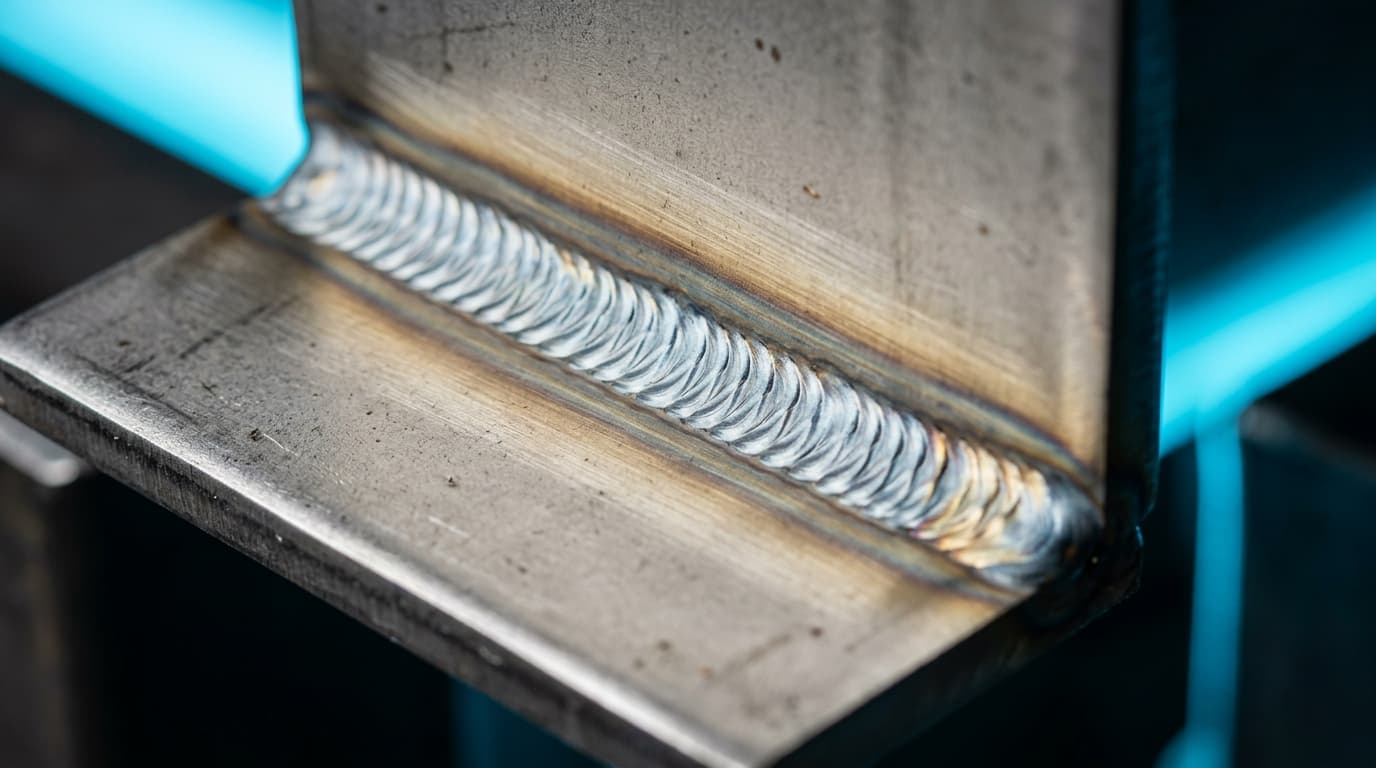
TIG (GTAW - Gas Tungsten Arc Welding), on the other hand, utilizes a non-consumable tungsten electrode and requires two-handed coordination. It produces zero spatter and pristine stacked-dime ripples that require minimal post-weld grinding.
Heat Input and Distortion Management
One of the greatest challenges when fabricating slender handrails or ornate gates is thermal warping. Stainless steel has higher thermal expansion and lower thermal conductivity than mild steel, concentrating heat in the joint zone.
Using pulse TIG settings allows our workshop fabricators to reduce net heat input by up to 35%, ensuring laser-straight railings without bow or twist.
Workshop Recommendation
For indoor staircases and architectural furniture, demand Grade 304 stainless steel joined via TIG with full pickling and passivation. For outdoor gates, MIG root passes followed by cosmetic cap passes provide optimal cost efficiency and structural strength.
Master fabricator holding certified credentials in structural steel joint metallurgy, ultrasonic test diagnostics, and modern CNC automation.